

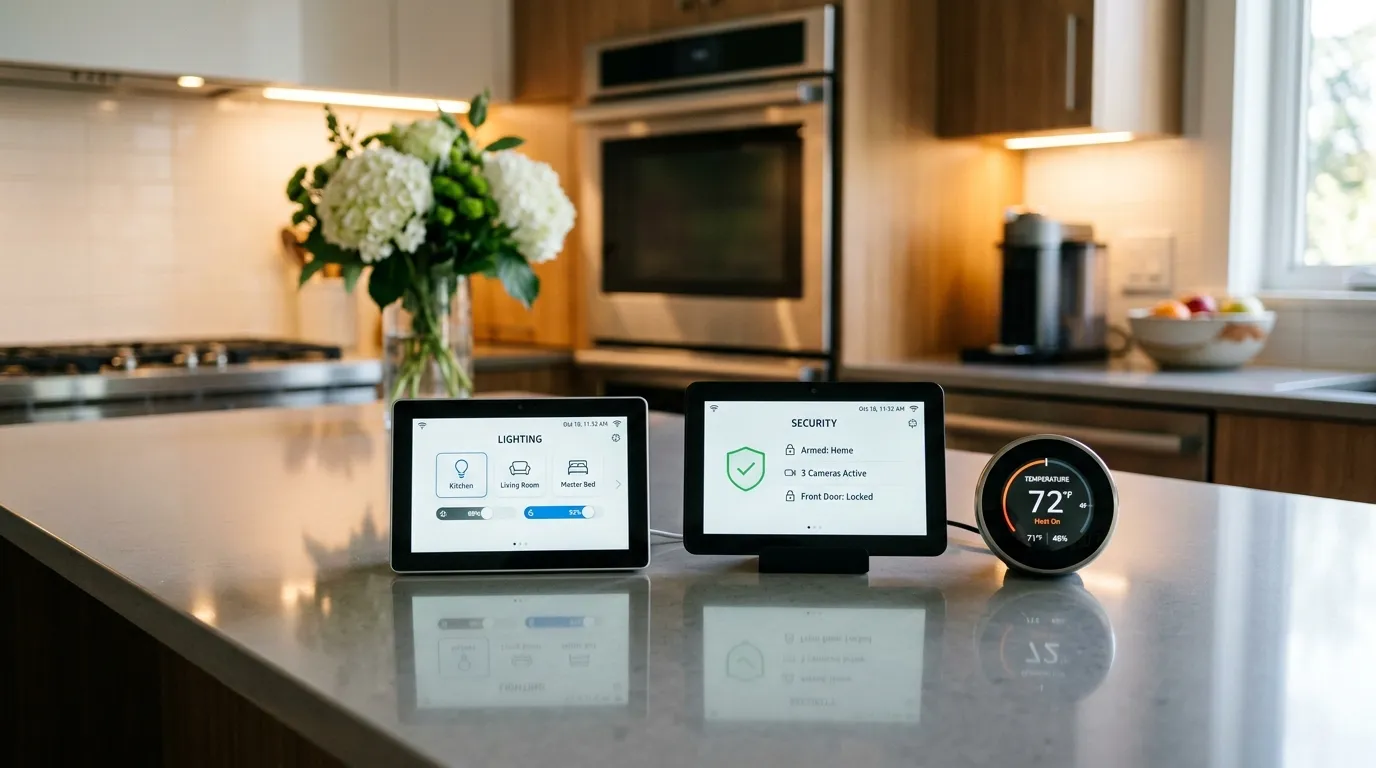
Creating an optimal learning environment demands precision. Utilizing smart home controllers transforms chaotic spaces into sanctuaries of calm, drastically improving cognitive focus and overall academic success.
This guide explores how regulating light, temperature, and sound with smart home controllers maximizes educational outcomes. You will discover actionable automation strategies, expert setup tips, and common pitfalls to avoid, ensuring your customized learning environment fosters deep, uninterrupted concentration and growth.
The Cognitive Connection to Environmental Control
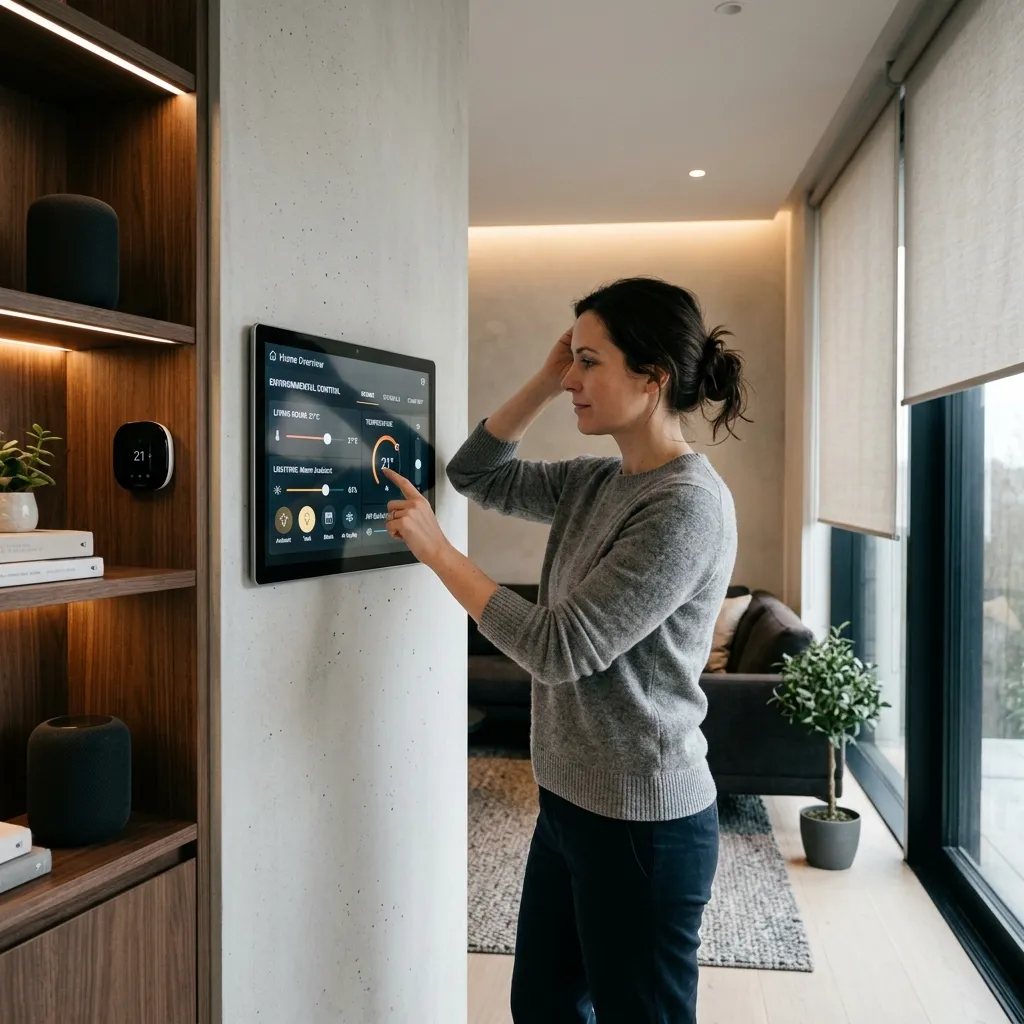
The link between a student’s physical environment and their ability to absorb information is profound and deeply rooted in cognitive science. Decades of research indicate that harsh lighting, fluctuating temperatures, and unpredictable background noise severely degrade cognitive stamina. When we introduce smart home controllers into an educational space, we fundamentally shift how a student interacts with their surroundings. Instead of fighting environmental distractions, the student experiences a tailored atmosphere that actively promotes deep work.
Students today face unprecedented levels of digital and physical distraction. A primary benefit of implementing robust home automation is the reduction of decision fatigue. Every time a learner stops to adjust a thermostat, close a blind, or dim a blinding desk lamp, their concentration breaks. Rebuilding that concentration takes valuable time and drains mental energy. By automating these micro-adjustments, we preserve cognitive bandwidth for actual learning. The American Psychological Association often highlights the importance of optimized physical spaces for student success, noting that environmental comfort directly correlates with test scores and information retention.
Managing these elements requires a centralized, intelligent system. This is why investing in reliable technology forms the absolute backbone of modern educational spaces. When all devices communicate through a single hub, parents and students can design strict routines that trigger automatically when study time begins. This seamless integration transforms a standard bedroom or home office into a high-performance academic zone. The central hub acts as an invisible conductor, orchestrating a symphony of devices that work together to shield the student from sensory overload.
Furthermore, integrating advanced educational paradigms requires vast environmental backing. Programs focusing on emotional regulation and cognitive stability depend on a predictable physical space. By utilizing smart home controllers, parents and educators can create an insulated ecosystem specifically intended for the psychological welfare of students. This technological shift moves the conversation from basic discipline strategies to practical, future-focused solutions that elevate a student’s ability to learn naturally and comfortably.
Illuminating the Path to Better Information Retention
Lighting plays an incredibly critical role in human biology, specifically regarding our circadian rhythms and visual comfort. Utilizing smart home controllers allows you to manipulate color temperature and brightness to match the specific cognitive task at hand. Poor lighting is a leading cause of eye strain, headaches, and premature mental fatigue during study sessions.
The Science of Color Temperature and Alertness
During intense study sessions requiring high alertness, cool white light mimicking daylight suppresses melatonin production. This keeps the brain alert, focused, and ready to process complex mathematical or analytical problems. Conversely, when a student shifts to reading a novel or winding down before bed, warm light reduces eye strain and signals the body to prepare for rest. Manually adjusting these settings constantly is tedious and often forgotten. However, scheduling these transitions automatically ensures the student always studies under optimal lighting conditions without ever having to touch a physical switch.
A proper smart lighting setup involves layering different light sources to create a balanced visual field. Overhead lights provide ambient illumination, while specialized desk lamps provide task lighting. When these layers are connected to a central hub, they can operate in tandem. For example, as the sun sets outside, the ambient room lights can gradually increase in brightness to compensate, preventing the sudden realization that the room has grown dark. This gradual, automated compensation prevents the jarring disruption of breaking focus to turn on a light.
Automated Study Routines for Mental Conditioning
Imagine a scenario where a high school student sits at their desk at exactly 4:00 PM every weekday. A programmed routine activates automatically, instantly closing the motorized window blinds to reduce screen glare, turning the overhead lights to a crisp white color temperature, and illuminating a focused task light directly over their textbooks. This physical environmental shift acts as a powerful psychological trigger. The brain begins to recognize this specific lighting arrangement as an undeniable signal to enter a state of deep concentration.
Over time, this Pavlovian response makes it easier for the student to drop into a flow state. The friction of starting homework is drastically reduced because the environment itself commands focus. Utilizing smart home controllers to establish this level of consistency is one of the most effective non-academic interventions a parent can provide. It builds healthy study habits through environmental design rather than relying solely on willpower.
Climate Management for Peak Mental Performance
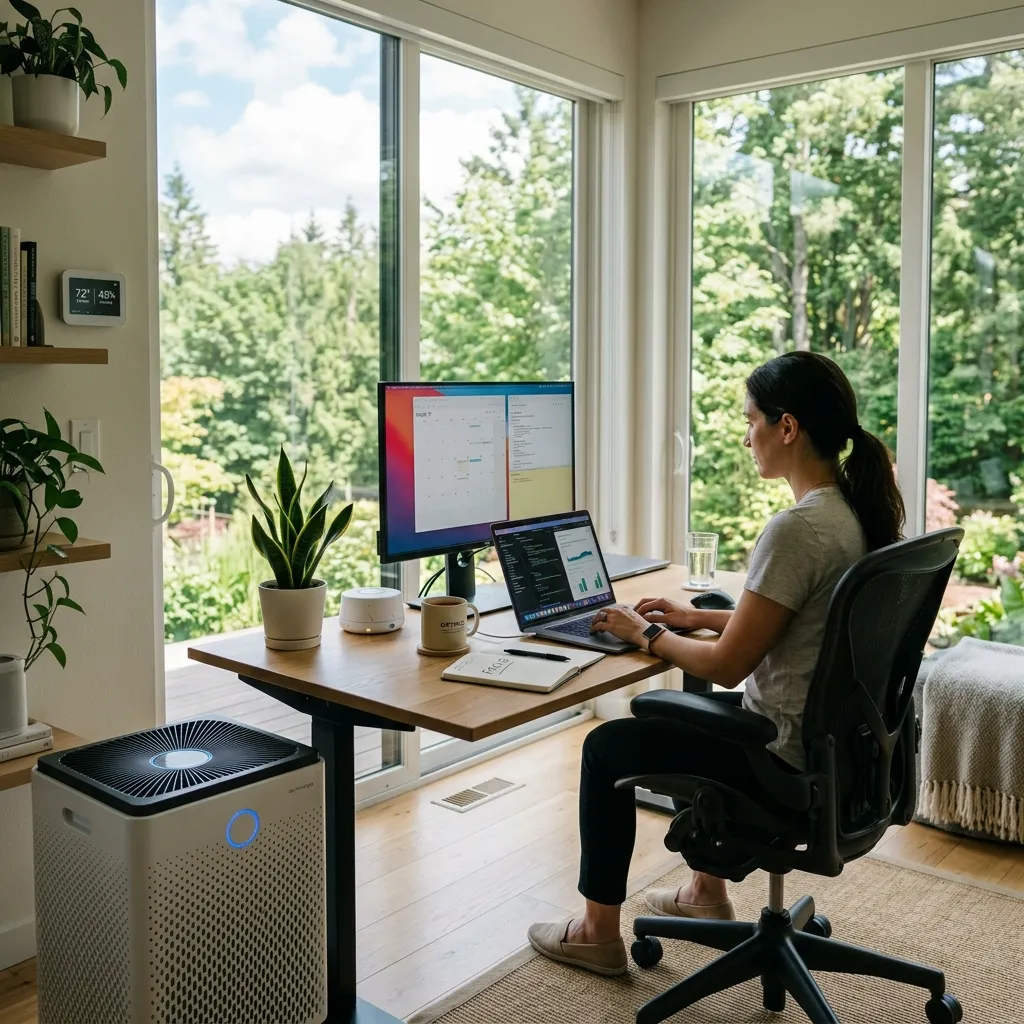
Temperature heavily dictates comfort and focus. Studies show that classrooms or study spaces that are too hot induce lethargy, sleepiness, and a lack of motivation. Conversely, spaces that are too cold cause distraction, physical discomfort, and an inability to concentrate on complex tasks. The ideal temperature for demanding cognitive work typically hovers around 70 to 72 degrees Fahrenheit.
Integrating climate control systems with smart home controllers completely eliminates these detrimental temperature fluctuations. You can utilize remote temperature sensors placed directly on the study desk to ensure the climate remains perfectly balanced where the student actually sits, rather than relying on a wall thermostat located in a distant hallway. This hyper-local temperature management guarantees optimal thermal comfort during critical study hours.
Beyond Temperature: Air Quality and Brain Health
Implementing automated climate control improves far more than just the ambient temperature; it drastically enhances indoor air quality. By connecting smart air purifiers to the central automation hub, the system can automatically increase filtration speed when particulate matter or carbon dioxide levels rise. High levels of indoor CO2 are scientifically proven to cause drowsiness and reduce cognitive function.
Clean, purified air prevents sluggishness and supports long-term brain health, proving that intelligent climate management extends far beyond basic heating and cooling. When smart home controllers detect a drop in air quality, they can trigger exhaust fans, open automated windows, or ramp up HEPA purifiers. This ensures the student’s brain receives maximum oxygenation, keeping them sharp and engaged throughout their entire study block.
Acoustic Environments and Advanced Noise Cancellation
Sound represents one of the most intrusive and uncontrollable barriers to effective learning. Sudden noises, such as a dog barking, a siren, or family members talking, disrupt trains of thought and elevate stress hormones. While you cannot always stop outside noise from occurring, you can absolutely control the acoustic environment within the study space to mitigate these disruptions.
Modern automation allows you to integrate high-fidelity smart speakers directly into your daily academic routines. When study time commences, the system can automatically begin playing continuous white noise, pink noise, or ambient rain sounds at a precise volume. This creates a sonic shield that masks sudden household interruptions. The student remains isolated in their own productive bubble, entirely unaware of the chaos that might be happening just outside their door.
Binaural Beats and Brainwave Entrainment
Taking acoustic management a step further, smart home controllers can be programmed to stream binaural beats during specific study periods. Binaural beats involve playing two slightly different frequencies in each ear, which encourages the brain to align with specific brainwave states associated with intense focus, creativity, or relaxation.
Having this auditory shield deploy automatically when a student sits at their desk creates an immediate, visceral sense of calm. There is no fumbling with apps or searching for playlists; the environment simply anticipates the need and provides the acoustic support required for maximum educational absorption. This level of environmental control was once reserved for elite productivity hackers but is now accessible to any student through consumer-level automation technology.
Comparison: Traditional vs. Automated Study Spaces
To fully appreciate the incredible transformation this technology offers, we must compare a standard, manually operated room with one highly optimized through intelligent automation hubs.
|
Feature |
Traditional Study Space |
Automated Learning Environment |
Cognitive Benefit |
|---|---|---|---|
|
Lighting |
Static, manual switches |
Dynamic, circadian-synced |
Reduces eye strain, maintains high alertness |
|
Temperature |
Central, often unbalanced |
Micro-zoned, sensor-driven |
Eliminates physical distraction and lethargy |
|
Acoustics |
Vulnerable to household noise |
Automated white noise shielding |
Prevents attention breakage, lowers stress |
|
Operation |
Requires manual adjustment |
Triggered by voice or schedule |
Eliminates decision fatigue, builds habits |
|
Air Quality |
Ignored or manually managed |
Monitored and automatically purified |
Maximizes oxygenation for peak brain function |
This detailed comparison clearly illustrates how the integration of automation shifts the heavy burden of environmental management entirely away from the student. By utilizing smart home controllers, the student is allowed to dedicate one hundred percent of their mental energy and cognitive resources to their actual educational materials, rather than managing their room.
Common Mistakes to Avoid
When building an automated study environment, users frequently encounter specific pitfalls that undermine their educational goals. Avoiding these errors is crucial for maintaining a calm, frictionless learning space.
The first major mistake is overcomplicating routines. Creating automations with too many variables or unpredictable triggers often leads to system failures or annoying distractions. Start with incredibly simple triggers. Do not program lights to change colors every ten minutes; this causes severe visual distraction rather than enhanced focus. Keep the environmental shifts subtle and purposeful.
Another frequent error is relying solely on cloud processing for critical study routines. Choosing devices that require an active internet connection for local, simple tasks causes severe delays and frustrating lag. Prioritize smart home controllers that process routines locally. This ensures that your lighting, acoustic, and climate routines execute instantly and reliably, even if your external internet service drops entirely.
Ignoring device compatibility is a fast track to a fragmented, frustrating setup. Buying devices on impulse without verifying their compatibility with your central hub forces you to use multiple apps, defeating the entire purpose of automation. Always check for native integration or Matter support before purchasing any new sensor, bulb, or plug.
Finally, neglecting data privacy is a massive oversight. Placing internet-connected cameras or unsecured microphones in a private study space compromises student privacy. You must secure your local network, change default passwords, and utilize strict smart home security protocols to protect your household network from external intrusions or data harvesting.
Expert Insights and Pro Tips
Educational psychologists and technology experts universally agree that environmental consistency breeds behavioral consistency. When a student enters a room and the environment physically shifts into a “study mode,” it reinforces a powerful psychological boundary between rest and work. This boundary is essential for students struggling with procrastination or attention deficit disorders.
Experts highly recommend utilizing Near Field Communication (NFC) tags to trigger these environments. Placing a small, programmable NFC sticker on the corner of a study desk allows a student to simply tap their smartphone against it when they are ready to work. This physical action instantly commands the smart home controllers to initiate the entire study routine. It makes the transition into focused work highly tactile and deliberate, bridging the gap between digital automation and physical intention.
Another pro tip involves utilizing gradual light fading for reading stamina. If a student plans to read a textbook for two hours, program the lighting to slowly transition from stark, bright white to a slightly warmer tone over the final thirty minutes of the session. This incredibly subtle shift naturally prepares the brain for an upcoming break without jarring the student out of their reading flow. It gently signals the passage of time without the anxiety-inducing shock of a loud alarm clock.
Integrating visual timers is another expert strategy. You can program smart home controllers to change a specific LED light strip from green to red when a Pomodoro study session is nearing its end. This provides the student with a silent, non-intrusive cue regarding their time management, helping them pace their work effectively without breaking their auditory concentration.
The Future of Automated Learning Environments
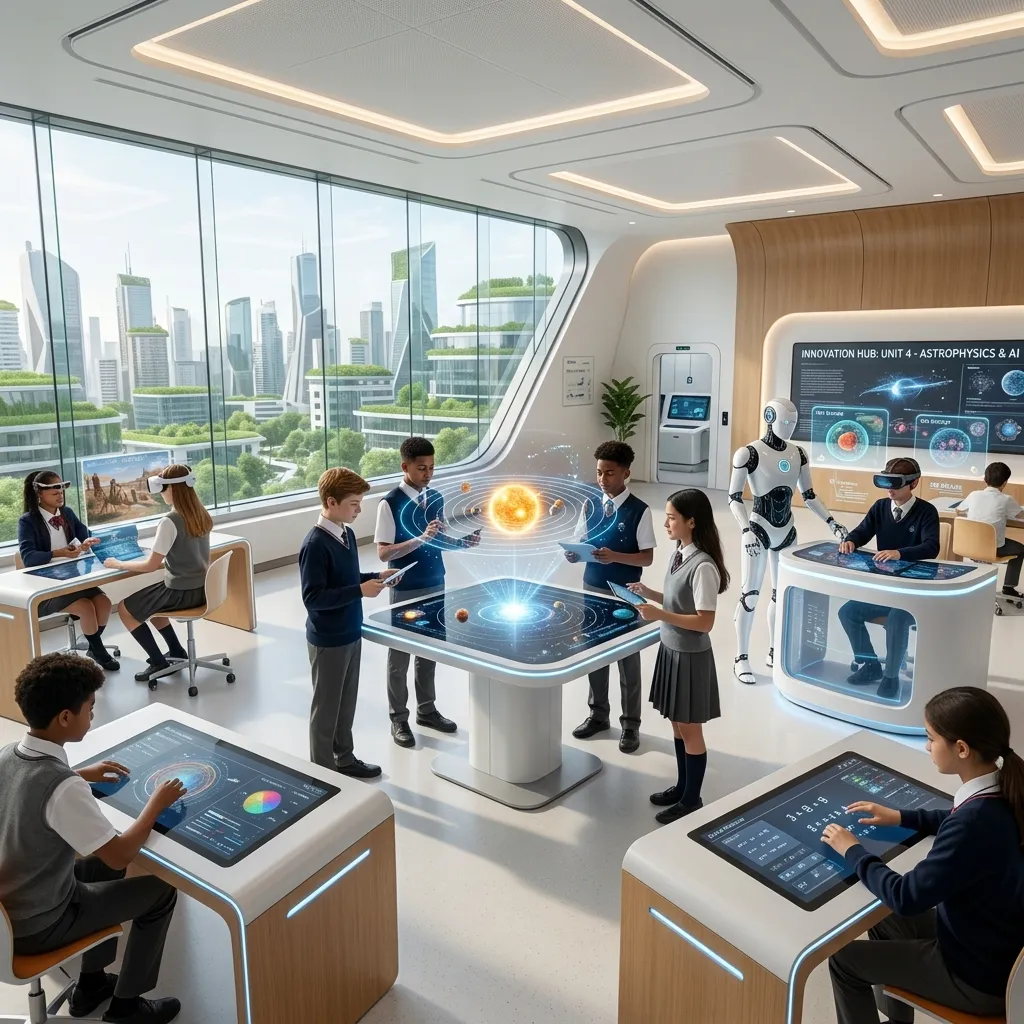
As artificial intelligence continues to merge seamlessly with home automation, study spaces will become even more reactive and personalized. Future systems will likely use advanced sensors to monitor a student’s posture, typing speed, or fidgeting frequency, automatically adjusting lighting or suggesting a short break when they detect physical fatigue.
We are moving toward an era where the room itself becomes an active participant in the educational process. Right now, setting up a responsive, calming environment represents the absolute most powerful tool a student can leverage outside of their actual academic curriculum. The ability to manipulate the physical world to serve intellectual growth is a monumental leap forward in educational support.
By removing environmental friction, minimizing sensory distractions, and optimizing physical comfort, we give students the greatest gift possible: the profound ability to focus deeply in an increasingly chaotic world. The mental stamina preserved by not having to manage a physical space translates directly into higher test scores, better essay writing, and a more profound understanding of complex subjects.
Transforming your educational environment requires utilizing smart home controllers to actively and aggressively eliminate distractions and physical discomfort. By intelligently automating lighting, acoustics, and climate, you empower students to achieve unprecedented cognitive focus. Invest in a structured automation setup today, follow expert guidance to avoid common pitfalls, and experience the profound, life-changing benefits of a truly customized, calming academic sanctuary.
When you prioritize the learning environment, you prioritize the learner’s future. Implement these strategies, optimize your smart home controllers, and watch as academic anxiety gives way to sustained, peaceful productivity.
Frequently Asked Questions
What exactly do smart home controllers do for a study space?
They act as the centralized, intelligent brain for all connected devices in the room. They allow you to automate lights, thermostats, and speakers simultaneously, creating a consistent, distraction-free environment tailored specifically for studying and deep cognitive work.
How does automated lighting improve cognitive focus for students?
Automated lighting adjusts color temperature and brightness to match human circadian rhythms. Cool, bright light boosts alertness during intense study, while warmer light reduces eye strain during reading, keeping the brain focused longer and preventing headaches.
Can these automation systems really help with ADHD or attention issues?
Yes. By removing environmental friction and creating a highly predictable, calming atmosphere via automated white noise and balanced lighting, these systems significantly reduce the sensory overload that often triggers attention loss in neurodivergent individuals.
Do I need a fast internet connection for these routines to work?
It depends entirely on your specific hardware. High-quality smart home controllers process automations locally on the device itself. This means your lighting and temperature routines execute instantly and reliably even if your external internet connection drops.
What is the most important device to automate for education?
Smart lighting provides the highest immediate impact on learning. Regulating visual input drastically affects energy levels, focus, and eye fatigue, making tunable smart bulbs the absolute best starting point for optimizing any educational space.
How can I block disruptive household noise effectively?
You can program your automation hub to trigger smart speakers to play continuous pink noise, white noise, or binaural beats whenever a study session begins. This effectively masks disruptive household sounds automatically, creating a quiet bubble for the student.
Are these complex automation systems difficult to install and manage?
Modern systems offer highly intuitive, user-friendly smartphone interfaces. Most require simply plugging in the hub, downloading a companion app, and following basic on-screen instructions to connect your devices and create automated daily schedules.
Will automated climate control make a noticeable difference in studying?
Absolutely. Studies definitively prove that environments above 74 degrees decrease academic performance and induce sleepiness. Automating a micro-climate around the desk ensures the student remains physically comfortable, preventing distraction caused by thermal discomfort.
What is the primary benefit of using an NFC tag for studying?
Tapping a phone to an NFC tag creates a deliberate physical commitment. It acts as a tactile trigger that commands the smart home controllers to activate the study environment, helping the student mentally and physically transition into work mode.
Can I integrate my existing Wi-Fi smart devices into a new centralized hub?
Usually, yes. Most top-tier smart home controllers support universal standards like Matter, meaning they can seamlessly pull your existing Wi-Fi plugs and bulbs into a unified system alongside newer, faster Zigbee or Z-Wave devices.



Leave a Reply