

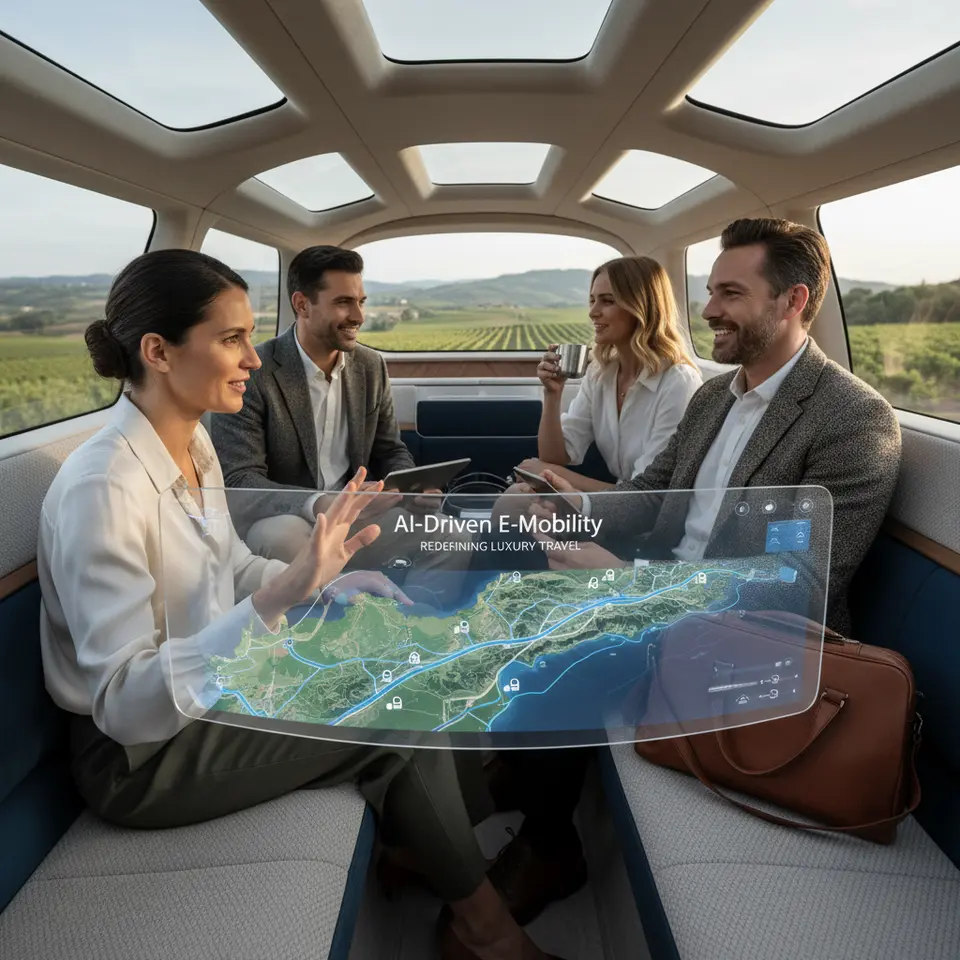
The adoption of AI-driven e-mobility is revolutionizing student transit, eliminating noisy commutes to cultivate unparalleled academic focus and prepare learners for a tranquil, optimized educational experience.
This comprehensive guide explores how transitioning to electric, artificially intelligent transportation systems drastically reduces cognitive fatigue and environmental stressors for students. We detail the technological frameworks, equity benefits, and infrastructure requirements necessary to turn school commutes into catalysts for enhanced classroom concentration.
The Paradigm Shift in Educational Transit
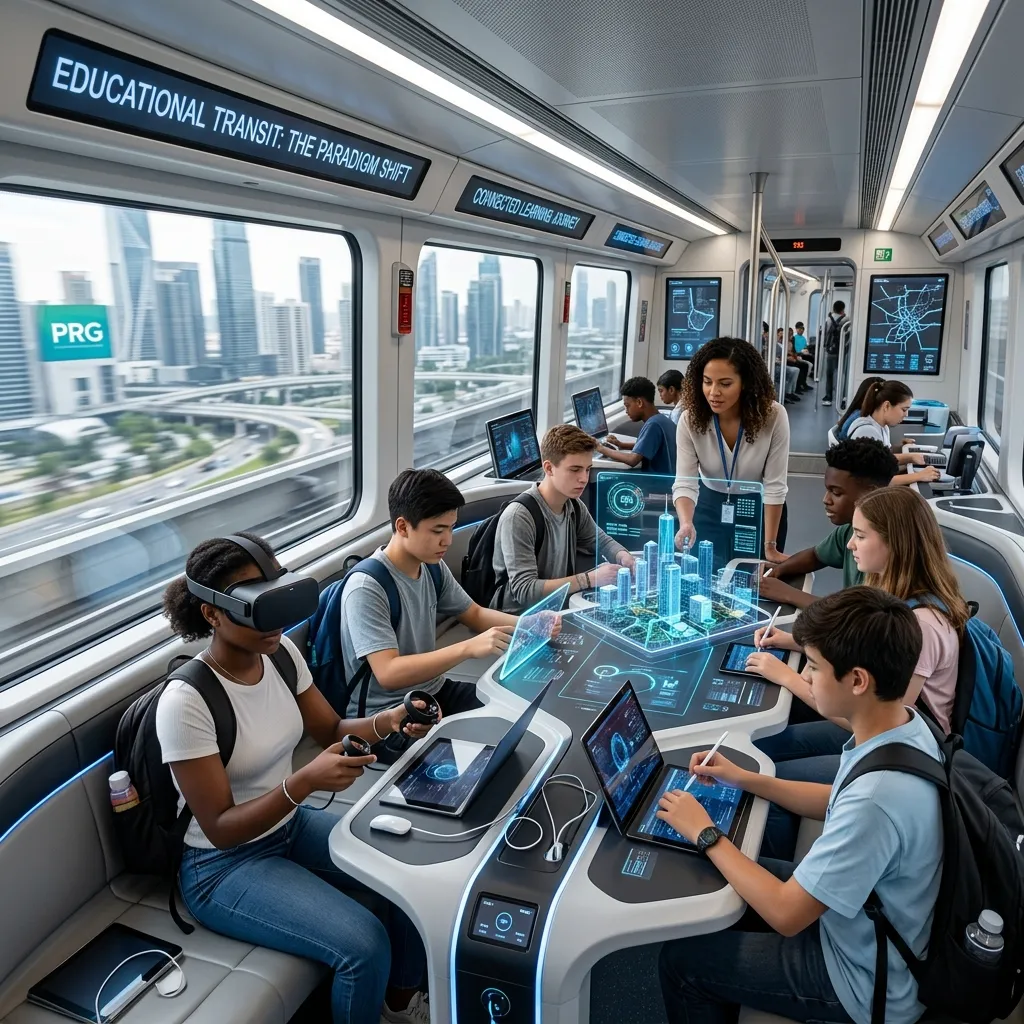
For decades, the journey to school has been an overlooked component of the educational ecosystem. Traditional diesel buses and congested campus traffic create environments filled with noise pollution, toxic exhaust fumes, and unpredictable delays. These factors severely disrupt student well-being before the school day even begins. However, the integration of AI-driven e-mobility is rapidly changing this narrative. By combining the quiet, clean operation of electric vehicles with the hyper-efficient routing of artificial intelligence, schools and universities are discovering a new way to foster calm and focus.
This transformation goes far beyond simply replacing an engine type. AI-driven e-mobility represents a holistic approach to transit where every data point—from battery temperature to local traffic patterns—is analyzed in real-time. The result is a seamless, silent, and entirely predictable transit experience. When students are not subjected to the physical and mental stress of a chaotic commute, their capacity for learning, emotional regulation, and cognitive retention increases exponentially.
The Role of AI in Luxury E-Mobility
AI-driven e-mobility relies on sophisticated algorithms that analyze vast datasets in real time. From monitoring battery health and predicting component wear to studying individual driving preferences, machine learning models craft bespoke travel experiences. Leading automakers and aerospace firms partner with research centers such as Stanford University’s AI Lab to refine neural networks that adapt to user behavior. These systems incorporate predictive maintenance, ensuring vehicles self-diagnose potential faults before they escalate, and dynamic route optimization, guiding passengers along the most efficient and scenic paths.
Adaptive driving modes exemplify the synergy of AI and e-mobility. In luxury electric supercars, algorithms modulate power delivery across axles, dynamically adjusting torque distribution and suspension stiffness to match road conditions and driver intent. The result is unparalleled handling precision and comfort. Meanwhile, in aerial vehicles, AI copilots compute three-dimensional traffic patterns, continuously recalibrating altitude and speed to avoid congestion and turbulence. This intricate coordination elevates safety and reduces energy consumption, underscoring how AI-driven e-mobility transforms both land and sky travel.
Key advantages of integrating AI into high-end mobility include:
Predictive Maintenance
Real-time monitoring of motor temperature, battery voltage, and component integrity helps prevent unplanned downtime. Data-driven alerts notify technicians and owners, enabling proactive service scheduling.
Personalized Environment
Biometric sensors measure heart rate and stress levels, while ambient controls adjust lighting color, seat temperature, and interior fragrances to enhance relaxation.
Intelligent Energy Management
AI models forecast energy consumption for each journey, optimizing regenerative braking strategies and determining the ideal charging schedule to prolong battery life.
In today’s competitive luxury market, AI-driven e-mobility is not merely an optional upgrade but a strategic imperative. As consumer expectations rise, brands that harness artificial intelligence to deliver seamless, adaptive, and sustainable experiences will lead the charge.
AI-Powered Electric Supercars

On land, electric supercars are embracing AI-driven e-mobility to deliver unprecedented performance and comfort. Behind the sleek carbon-fiber exteriors lie machine-learning algorithms that control every aspect of the driving experience. Advanced powertrain management systems use predictive models to allocate torque, optimize battery usage, and dynamically adjust aerodynamic components. Approaching a hairpin turn, onboard AI analyses speed, lateral acceleration, and tire grip, autonomously fine-tuning suspension settings and brake bias for maximum stability and precision.
Inside the cabin, biometric access controls verify identity through fingerprint or retinal scans, ensuring only authorized drivers can engage the powertrain. Once onboard, drivers select from adaptive modes—such as Comfort, Sport, or Hyperdrive—each calibrated by AI to remember individual preferences. Mood-detecting ambient lighting adapts to the driver’s emotional state, shifting hues to soothe or invigorate. Voice-controlled infotainment systems leverage natural language understanding to execute commands without distraction, from adjusting cruise profiles to curating personalized playlists.
Key innovations in AI-enhanced supercars include:
Neural Torque Distribution
Deep learning networks continuously learn from road data, predicting traction needs and preemptively modulating torque across wheels.
Regenerative Brake Optimization
Algorithms evaluate topography and driving behavior to optimize energy recuperation, maximizing range without sacrificing responsiveness.
Intelligent Thermal Management
AI systems monitor battery cell temperatures and ambient conditions, controlling coolant flows and cabin climate to maintain peak efficiency.
By integrating AI at both hardware and software levels, electric supercar manufacturers achieve a delicate balance between power, range, and luxury. Travelers benefit from vehicles that not only perform at astonishing speeds but also learn and evolve with each drive, embodying the essence of AI-driven e-mobility.
The Psychological Impact of Clutter-Free Spaces
Beyond the sensory and physical components, the visual aesthetics of a study space heavily influence stress levels and anxiety. A chaotic, disorganized desk leads to a cluttered mind. Embracing minimalism helps maintain a clean, orderly environment. A quantum AI concierge curates digital clutter just as effectively as physical tools curate a desk. It organizes files, prioritizes immediate tasks, and hides unnecessary notifications.
This intentional design philosophy creates a calming atmosphere where the student feels in control, relaxed, and ready to learn. Incorporating AI-driven classroom tools at home streamlines the learning process, automating administrative tasks so students focus purely on academics. When the environment is clear of both physical and digital clutter, the mind is absolutely free to absorb, synthesize, and apply new information. A quantum AI concierge actively blocks social media and irrelevant emails during designated focus blocks, acting as a digital gatekeeper for the student’s attention.
Expert Insights and Pro Tips
Educators, cognitive psychologists, and technologists increasingly advocate for better environmental tools to support learning. Experts suggest that the return on investment for a quantum AI concierge is found in time saved and frustration avoided. By learning exactly how a student operates, the system removes the daily friction of managing a schedule and an environment.
Pro Tips for Maximizing Your Setup
- Prioritize Sensory Control: Cognitive scientists emphasize that managing what you see, hear, and feel acts as step one in maximizing neuroplasticity. When the brain feels safe and undisturbed, it forms stronger neural pathways. Let your quantum AI concierge fully manage your room’s audio and lighting.
- Embrace Customization: Tailor the environment to the individual. Not every student needs the exact same setup. Some thrive with ambient sound, while others need total silence. A quantum AI concierge offers the precise customization necessary to adapt to individual neurodivergent needs.
- Protect Biological Rhythms: Sleep specialists frequently recommend smart lighting systems to students. The ability to filter out blue light automatically in the evening prevents sleep disruption, ensuring the brain can properly consolidate memories overnight. Trust your quantum AI concierge when it signals that it is time to power down for the night.
- Utilize personalized learning pathways: Allow the system to analyze your best testing scores and align your study habits to those specific conditions. If you score higher after studying with classical music, the system will ensure classical music plays during future sessions.
Common Mistakes to Avoid
When users first deploy a quantum AI concierge, they often make critical errors that negate the benefits of their investment. Understanding these pitfalls ensures that your resources are allocated efficiently.
First, many people override the system’s recommendations. If a quantum AI concierge suggests a five-minute break based on declining typing speed and focus metrics, ignoring that advice leads to burnout. Always ensure that you listen to the functional data the system provides.
Second, users sometimes fail to integrate the system fully. A quantum AI concierge works best when it connects to your calendar, your lighting, your audio, and your coursework. Keeping it isolated as a simple chatbot drastically limits its ability to create a calm, unified learning environment.
Third, a frequent mistake involves ignoring lighting entirely. People will spend thousands of dollars on a high-performance computer but refuse to connect smart bulbs to their quantum AI concierge. Proper illumination should always act as one of the first environmental factors addressed when upgrading a space.
Finally, over-saturating the space with manual notifications is a massive error. A quantum AI concierge aims to reduce cognitive load. If you manually force the system to ping you for every tiny email or update, you destroy the calm environment the tool specifically creates.
Comparing Standard Assistants to a quantum AI concierge
Understanding the distinct advantages of high-quality tools helps justify the transition. The differences between basic digital assistants and a quantum AI concierge are stark when evaluating their impact on a student’s daily academic life.
|
Feature Category |
Standard Digital Assistant |
quantum AI concierge |
|---|---|---|
|
Audio Control |
Basic volume adjustments |
Integrates spatial audio and noise cancellation automatically based on focus levels |
|
Environmental Support |
Manual thermostat and light control |
Predictive circadian rhythm optimization and proactive ergonomic alerts |
|
Task Management |
Simple alarms and reminders |
Dynamic personalized learning schedules that adapt to cognitive fatigue |
|
Device Integration |
Siloed apps requiring manual sync |
Seamless multi-device syncing creating a unified, distraction-free ecosystem |
|
Cognitive Impact |
High distraction potential from alerts |
Explicitly designed to minimize cognitive load and induce deep calm |
By reviewing this comparison, it becomes evident that upgrading to a quantum AI concierge fundamentally alters the baseline of the student’s daily academic experience, reducing friction, and maximizing comfort.
Electric Vertical Take-Off and Landing Aircraft
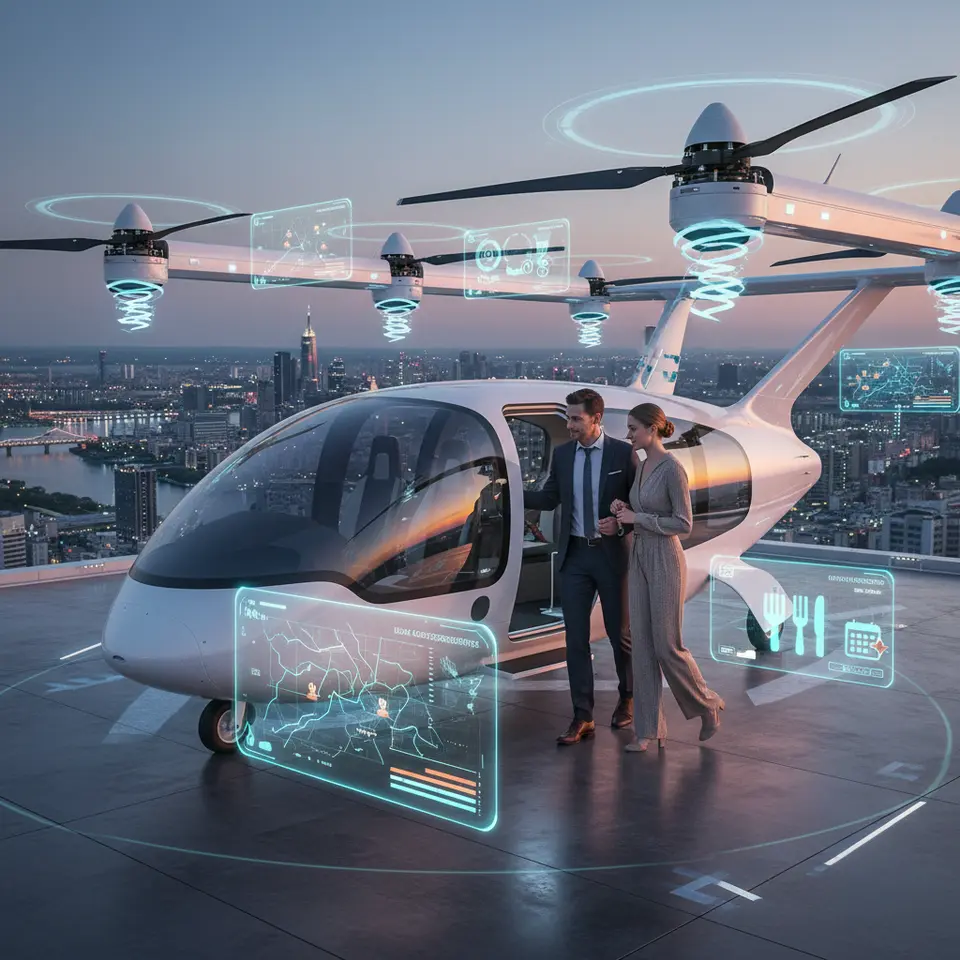
In the skies, electric vertical take-off and landing (eVTOL) aircraft epitomize AI-driven e-mobility’s potential to revolutionize urban and regional air travel. Equipped with distributed electric propulsion and advanced flight-management systems, these crafts promise quiet, emission-free journeys from rooftop vertiports to hinterland airstrips. AI copilots continuously analyze telemetry data, coordinating multiple rotors for precise lift and thrust adjustments that compensate for wind shear, gusts, and sudden payload changes.
Inside the cabin, passengers enjoy bespoke modules designed for comfort and productivity. Nanotech cooling systems regulate seat temperature, while panoramic smart-glass windows tint on demand to reduce glare. Spatial audio suites deliver personalized soundscapes, whether orchestrating relaxation sessions or providing in-flight briefings. Sophisticated environmental sensors monitor air quality, automatically adjusting filtration to maintain optimal oxygen levels. Throughout the flight, AI-driven interfaces display real-time route updates, local weather, and terrain warnings, ensuring transparency and peace of mind.
Core features of AI-enhanced eVTOL aircraft include:
Three-Dimensional Traffic Management
AI systems integrate airspace data from government agencies and private networks, dynamically assigning aerial corridors and altitudes to prevent conflicts.
Adaptive Flight Control
Machine learning models optimize rotor speeds and vectoring to reduce noise, enhance stability, and conserve power.
In-Flight Concierge Services
AI bots handle personalized requests, from gourmet meal deliveries sourced by Michelin-starred chefs to last-minute itinerary changes.
As urban centers embrace vertiport infrastructure, AI-driven e-mobility brings elite travelers unparalleled access and flexibility. Quiet, emissions-free flights reduce reliance on congested ground routes, underscoring the promise of sustainable, high-end air transit.
Smart Charging Infrastructure
Advanced charging networks form the backbone of AI-driven e-mobility. Luxury estates, exclusive resorts, and metropolitan hubs are integrating AI-powered stations that operate on renewable energy and grid-responsive architectures. These chargers utilize predictive analytics to balance load distribution, schedule maintenance, and even deploy mobile charging drones for remote concierge services. Proprietary mobile apps grant owners the ability to reserve preferred charging bays, receive live status notifications, and summon valet technicians for personalized assistance.
Leading-edge stations feature:
Renewable Integration
Solar canopies and wind turbines supply clean energy directly to charging units, with AI algorithms forecasting generation based on weather and demand patterns.
Grid-Aware Management
AI systems negotiate tariffs and optimize draw profiles to reduce peak loads, leveraging vehicle-to-grid (V2G) capabilities to store and return energy as needed.
Mobile Charging Services
Autonomous drones and vans equipped with high-capacity batteries provide on-site top-ups, ensuring vehicles at remote locations remain fully charged.
Luxury lounges adjacent to charging stations offer curated experiences—personal trainers, AR-enhanced retail spaces, and gourmet bars—allowing travelers to maximize productivity and relaxation during charging intervals. This synergy of AI-driven e-mobility and upscale amenities transforms downtime into an extension of the luxury journey.
Personalized Onboard Experiences
True luxury in AI-driven e-mobility extends beyond propulsion systems into the realm of holistic well-being. Cars and eVTOL cabins are becoming sanctuaries tailored to individual needs through AI-curated wellness programs. On long drives, built-in wellness algorithms prompt micro-breaks, propose guided meditation sessions via holographic coaches, and adjust cabin fragrances to alleviate stress. Spatial audio technology delivers immersive soundscapes—ranging from ambient nature recordings to bespoke playlists—synced with adaptive lighting that modulates intensity and color temperature.
In the air, AI-driven cabin management orchestrates every detail. Concierge bots handle meal preferences, sourcing ingredients from farm-to-table providers and coordinating with ground teams for preloading. Passengers can update itineraries through natural language voice commands, and the system seamlessly integrates changes with ground transport and accommodation partners. Biometric sensors track fatigue indicators, recommending rest protocols or custom massage sequences in integrated seat modules.
Highlights of personalized onboard offerings include:
Deep Learning Wellness
AI analyzes biometric data to suggest tailored wellness interventions, from breathing exercises to posture adjustments.
AR-Enhanced Environments
Augmented reality windows transform views into interactive experiences, overlaying route information or historical insights about landmarks.
Seamless Connectivity
High-speed satellite links ensure uninterrupted communication, enabling video conferencing, streaming, and real-time data exchange.
By converging AI-driven e-mobility with bespoke lifestyle services, the industry redefines what it means to travel in luxury. Every journey becomes a curated narrative, shaped by data-driven insights and intuitive technology.
Conclusion
AI-driven e-mobility is forging a new era of luxury transportation that blends sustainability, personalization, and technological excellence. By harnessing intelligent powertrains, electric vertical take-off crafts, and smart infrastructure, elite travelers gain access to journeys that are as efficient as they are indulgent. The integration of wellness-focused features and predictive analytics ensures that every aspect of the trip aligns with individual preferences and environmental goals.
As of this year (2026), collaboration among industry leaders, research institutions, and regulatory bodies is accelerating the deployment of AI-driven e-mobility solutions across global hotspots. From private estates to urban vertiports, this seamless ecosystem promises unforgettable experiences that respect both people and planet. For those seeking the pinnacle of opulent travel, the fusion of AI, electrification, and bespoke design offers a transformative pathway toward the future of luxury mobility.
Frequently Asked Questions
1. What exactly is a quantum AI concierge?
A quantum AI concierge is an advanced digital system that utilizes rapid data processing to manage a student’s learning environment. It integrates with smart lighting, audio devices, and digital calendars to create a completely optimized, distraction-free zone that adapts in real-time to a learner’s cognitive state.
2. How does a quantum AI concierge improve daily studying?
The system delivers a calm environment by removing friction. It automatically silences digital notifications during study blocks, adjusts room lighting to reduce eye strain, and plays focus-enhancing audio. This prevents listening fatigue and supports prolonged concentration without annoying interruptions.
3. Is a quantum AI concierge safe for student privacy?
Yes, reputable systems prioritize data security. While a quantum AI concierge learns your schedule and environmental preferences, this data is typically encrypted and stored locally or on secure servers, ensuring that a student’s learning habits and personal information remain entirely private.
4. Can this system really affect my academic performance?
Absolutely. By controlling factors like the human circadian rhythm through smart lighting, a quantum AI concierge increases alertness during daytime study sessions. Shifting to warmer light in the evening helps your brain naturally produce melatonin, ensuring you get the restorative sleep necessary to consolidate new information.
5. Why is a minimalist desk setup important when using this technology?
A cluttered visual field constantly competes for your brain’s attention. Even if you do not actively look at the mess, your brain processes it in the periphery, which uses up valuable cognitive energy. A quantum AI concierge thrives in a minimalist setup because it removes visual distractions, allowing absolute focus to remain on your academic work.
6. How do I start using a quantum AI concierge on a strict budget?
Start by utilizing the core software features to manage your schedule and digital distractions. You do not need to buy every smart home device at once. Gradual, targeted upgrades—like adding a single smart bulb or affordable noise-canceling headphones connected to your quantum AI concierge—will still provide massive improvements over time.
7. Does a quantum AI concierge help with neurodivergent learning?
Yes, these tools prove especially beneficial for individuals with ADHD, autism, or sensory processing differences. The ability of a quantum AI concierge to strictly control lighting intensity, silence unpredictable background noises, and adjust physical comfort helps prevent sensory overload and creates a highly conducive environment for sustained focus.
8. What is the difference between standard scheduling apps and this system?
Standard apps require manual input and only alert you when an event occurs. A quantum AI concierge uses predictive analytics to see when you are most productive, automatically schedules difficult tasks for those peak times, and actively prepares your physical room environment for that specific study session.
9. How long does it take for a quantum AI concierge to learn my habits?
Most systems begin offering basic optimizations immediately, but they truly personalize your experience after about two to three weeks of consistent use. During this time, the quantum AI concierge tracks your focus levels, sleep patterns, and academic outputs to refine its environmental adjustments.
10. Can I use a quantum AI concierge effectively in a small dorm room?
Yes, in fact, it is even more critical in small, shared spaces. When you cannot control your broader external environment, a quantum AI concierge connects to personal tools like headsets and desk lamps to carve out a highly personalized zone of calm and focus right at your desk, regardless of what your roommates do.



Leave a Reply